

Wedding Reception Timeline That Keeps the Party Moving

The best wedding reception timeline does not feel like a schedule being followed. It feels like the room naturally shifts from cocktails to cheers, dinner to laughter, and dancing to those final photos nobody wants to stop taking. That sense of ease comes from planning the key moments in the right order, then leaving breathing room for real life.
For most couples, a reception runs four to five hours. That is enough time for a warm welcome, a satisfying meal, meaningful toasts, photos with the people you love, and a dance floor that actually gets used. The details can change based on your venue, guest count, meal style, and whether you are planning around an Oahu sunset, but the goal stays the same: keep guests comfortable and keep the celebration moving.
Start Your Wedding Reception Timeline With Guest Experience
Before assigning times to traditions, think about what your guests will be doing between them. A long gap before dinner can leave people hungry. Back-to-back speeches can drain the energy from the room. Saving all the dancing until the final hour may mean older relatives and early departures miss it entirely.
Your reception should alternate between seated moments and active moments. Guests can settle in with cocktails, enjoy a grand entrance, sit for dinner, stand for a toast, visit a photo booth, and then join the dance floor. That rhythm makes the event feel full without feeling rushed.
Build your timeline around the time printed on the invitation, not the time you expect the first guest to arrive. If cocktails begin at 5:00 p.m., your vendors should have a clear plan for setup well before then. For a photo booth, opening during cocktail hour or shortly after dinner gives guests an easy activity while the room transitions.
A Sample 5-Hour Wedding Reception Timeline
This sample works well for a reception with cocktails, a plated or buffet dinner, speeches, cake, and dancing. Treat the times as a starting point, not a rulebook.
5:00 p.m. - Cocktail Hour and Guest Arrival
Guests arrive, find their seating assignments, grab a drink, and begin catching up with family and friends. This is also a great window for couple portraits if you chose to take some photos after the ceremony. Keep music playing and give guests something to enjoy beyond the bar.
A photo booth can work especially well here. Early photos tend to include grandparents, parents, and guests who may leave before the final dance set. If the booth opens at cocktail hour, make sure it is in a visible location without blocking the path to dinner or the restrooms.
6:00 p.m. - Grand Entrance and First Dance
Once guests are seated, bring in the wedding party and newlyweds. Move directly into the first dance while everyone is already focused on the couple. This creates a strong opening without asking guests to wait through several announcements.
Some couples prefer to do a private first dance earlier and enter the reception together without a formal introduction. That choice can feel more relaxed, especially for a smaller wedding. If a big entrance is important to you, keep it short and upbeat.
6:10 p.m. - Welcome and Dinner Service
A quick welcome from the couple, host, or planner sets a gracious tone. Then let dinner begin. A plated meal may take 45 to 60 minutes, while a buffet may need more time depending on the number of guests and serving stations.
Do not schedule too much entertainment while people are actively eating. Guests want to talk, enjoy their food, and take a breath after the ceremony. If you are using a photo booth, dinner can be a quieter period, but it is still useful for guests who want a fun break between courses.
7:00 p.m. - Toasts and Special Dances
Toasts work best when guests have finished most of their meal but are still gathered at their tables. Keep speeches meaningful and well paced. Three short toasts usually land better than six lengthy ones.
After the speeches, move into parent dances or any cultural traditions that matter to your families. Grouping these moments together gives them importance and clears the way for an open dance floor afterward. If you are worried about timing, ask each speaker to aim for two to three minutes.
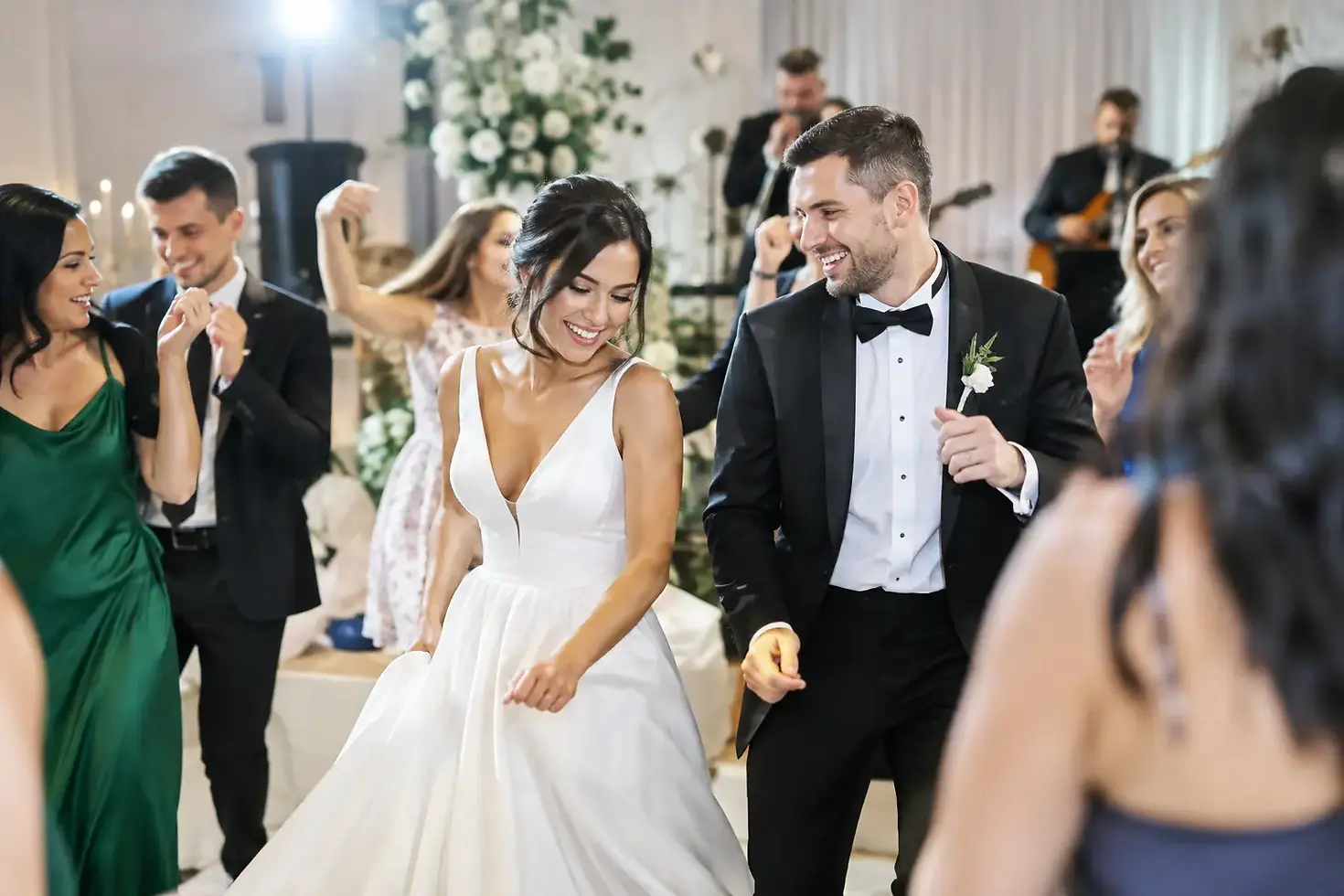
7:30 p.m. - Open the Dance Floor
This is the moment to shift the energy. Invite everyone onto the floor with a high-energy song rather than simply announcing that dancing has started. Your DJ or band should know which songs bring your crowd together, whether that means old-school favorites, local classics, or current hits.
Leave at least 60 to 90 minutes of real dance time before the final send-off. Couples often underestimate how quickly formalities add up. If dancing is a priority, protect this part of the schedule instead of adding another activity.
8:15 p.m. - Cake, Dessert, or a Short Featured Moment
A cake cutting, dessert reveal, anniversary dance, or late-night snack creates a natural reset. Keep it brief, then bring the party right back to the floor. Doing cake earlier also means guests who leave early can enjoy dessert and see the moment.
This is often when a photo booth becomes busiest. People have eaten, loosened up, and seen other guests carrying fun photo strips or sharing images. Props and a custom backdrop can reflect the wedding colors, island setting, or couple’s personality without taking attention away from the celebration.
8:30 p.m. - More Dancing and Candid Memories
The final stretch should feel open. Avoid stacking formal events here unless one truly matters to you. Guests will be dancing, reconnecting, taking pictures, and enjoying the feeling that the schedule is no longer controlling the night.
If you have hired a booth for a set number of hours, consider keeping it open through most of this period. Hawaii Photo Booth has served celebrations since 2008, and a booth near the dance floor can give guests of every age a fun place to capture a keepsake when they need a break from dancing.
9:45 p.m. - Last Dance and Farewell
Give your DJ, photographer, coordinator, and venue a clear last-call plan. You may want one final song for everyone, followed by a private last dance after guests exit. A short farewell announcement helps guests gather their favors, photos, and belongings before the evening ends.
Build in Time Buffers Where They Matter
A polished timeline is not packed minute by minute. It includes small buffers because family photos run long, a buffet line moves slowly, or an uncle decides his toast needs one more story. Add 10 to 15 minutes around dinner, transitions, and any moment that requires guests to move from one space to another.
Be especially realistic about sunset portraits. In Hawaii, the light can be beautiful, but sunset does not wait for a late entrée or a delayed ceremony. Work with your photographer to decide whether you will step away for 10 to 15 minutes, then tell your planner, DJ, and caterer exactly when that will happen.
Choose What Matters Most to You
You do not have to include every reception tradition. Skip the bouquet toss if it does not feel like you. Shorten speeches if dancing matters more. Serve dessert stations instead of pausing everyone for a cake cutting. A wedding reception timeline should reflect the way you want to celebrate, not a checklist borrowed from someone else’s wedding.
The one thing worth protecting is connection. Make space for a meal you can enjoy, a few quiet minutes with each other, and photos with the people who traveled to celebrate you. When the schedule supports those moments, your guests will remember a reception that felt joyful, personal, and easy to be part of.


Comments